Hotel Room Number Signs Font Standards for Compliance
Hotel room number signs font standards: ADA character height, braille placement, contrast ratio, and font selection for hotel procurement and compliance teams.
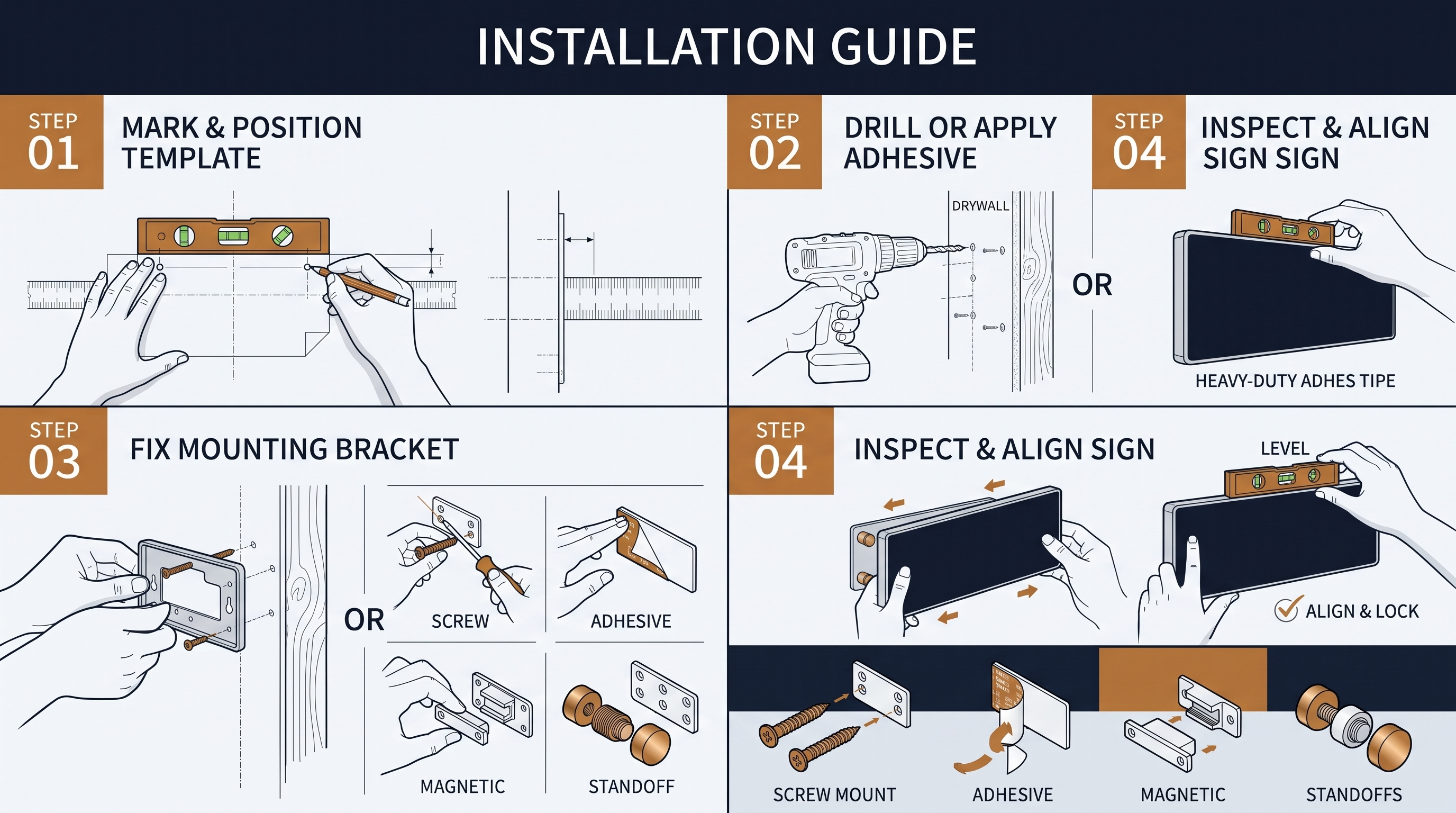
Hotel room number signs font standards is the most specification-intensive reference resource a hotel procurement team uses when specifying room identification systems. Hotel room number signs font standards cover the ADA character height requirements, the ADA character proportion requirements, the ADA braille placement requirements, the ADA contrast ratio requirements, the font selection, the typography alignment with the property brand, and the typography alignment with the property interior design. The hotel room number signs font standards guide provides a structured decision matrix that procurement teams can use to specify the optimal font and typography for the property regulatory environment, the property brand positioning, and the property interior design alignment.
Hotel room number signs font standards are the specification that drives the visual presentation, the ADA compliance, and the brand alignment of the room identification system. The hotel room number signs font standards cover the font family selection, the font size selection, the font weight selection, the character height compliance, the character proportion compliance, the braille placement compliance, the contrast ratio compliance, and the typography alignment with the brand book. The hotel room number signs font standards guide helps procurement teams specify the optimal font and typography that meets the ADA accessibility requirements, the property brand positioning, and the property interior design alignment.
The hotel room number signs font standards analysis is a critical input to the property regulatory compliance, the property brand alignment, and the property interior design alignment, because the font and typography selection affects the regulatory compliance, the brand presentation, and the interior design integration. The hotel room number signs font standards guide recommends that procurement teams engage the ADA consultant, the brand management team, and the interior design team from the design development phase, because the font and typography selection is the primary specification axis that affects all three dimensions. The hotel room number signs font standards guide treats the font and typography selection as the primary specification axis, with the brand alignment, the regulatory compliance, and the interior design alignment as the integrated specification dimensions.
Why Hotel Room Number Signs Font Standards Drive ADA Compliance
Hotel room number signs font standards drive ADA compliance because the ADA Standards for Accessible Design specify the character height, the character proportion, the character spacing, the braille placement, the contrast ratio, and the mounting location for the room identification system. The hotel room number signs font standards analysis must account for the ADA character height requirements, the ADA character proportion requirements, the ADA braille placement requirements, the ADA contrast ratio requirements, the ADA mounting location requirements, and the ADA font selection preferences. The hotel room number signs font standards guide treats the ADA compliance as the primary specification axis, with the font selection, the typography alignment, and the brand alignment as the integrated specification dimensions.
The hotel room number signs font standards analysis is also a critical input to the property legal exposure and the operational risk management, because non-compliant font and typography specifications can create legal liability, regulatory enforcement, and operational disruption. The procurement team that invests the appropriate time in the font standards analysis is better positioned to defend the font and typography specification against regulatory challenge and to manage the operational risk of the room identification system. The hotel room number signs font standards guide treats the legal exposure and the operational risk management as a primary specification axis, with the regulatory compliance scope integrated into the procurement specification.
The hotel room number signs font standards analysis must also account for the multi-jurisdictional compliance scope for international hotel chains, because the font and typography specifications may need to comply with multiple national accessibility standards. The procurement team that understands the multi-jurisdictional font standards scope is better positioned to specify the font and typography that meets all applicable international accessibility requirements. The hotel room number signs font standards guide treats the multi-jurisdictional compliance as a primary specification axis, with the compliance scope integrated into the supplier qualification and the supplier documentation.
Hotel Room Number Signs ADA Character Height Requirements
Hotel room number signs ADA character height requirements are the first specification axis of the hotel room number signs font standards analysis, and the character height drives the visibility, the ADA compliance, and the brand alignment. The hotel room number signs font standards guide typically presents the ADA character height tiers that align with the property regulatory environment and the brand positioning. The first tier is the standard character height, which is the baseline specification for most properties. The second tier is the premium character height, which is the specification for properties that require higher visibility. The third tier is the architectural character height, which is the specification for flagship properties and architecturally significant areas.
The standard character height for hotel room number signs is typically 1 inch (25 mm) to 1.5 inches (38 mm) capital letter height, with the character height compliance integrated into the sign design. The standard character height is the most common specification for most properties, with the character height compliance integrated into the ADA accessibility audit. The hotel room number signs font standards guide treats the standard character height as the baseline specification and applies cost multipliers for the premium and architectural character heights.
The premium character height for hotel room number signs is typically 1.5 inches (38 mm) to 2 inches (50 mm) capital letter height, with the character height compliance integrated into the sign design. The premium character height is the second most common specification for upscale properties, with the character height compliance integrated into the ADA accessibility audit. The hotel room number signs font standards guide treats the premium character height as the specification for upscale properties, with the cost premium quantified and the brand alignment integrated into the specification.
The architectural character height for hotel room number signs is typically 2 inches (50 mm) to 3 inches (75 mm) capital letter height, with the character height compliance integrated into the sign design. The architectural character height is the most common specification for flagship properties, with the character height compliance integrated into the ADA accessibility audit. The hotel room number signs font standards guide treats the architectural character height as the specification for flagship properties, with the cost premium quantified and the brand alignment integrated into the specification.
Hotel Room Number Signs ADA Character Proportion Requirements
Hotel room number signs ADA character proportion requirements are the second specification axis of the hotel room number signs font standards analysis, and the character proportion drives the readability, the ADA compliance, and the brand alignment. The hotel room number signs font standards guide typically presents the ADA character proportion tiers that align with the property regulatory environment and the brand positioning. The ADA character proportion requirements typically specify the character width-to-height ratio, the character stroke width-to-height ratio, and the character spacing relative to the character height. The hotel room number signs font standards guide treats the character proportion as the primary specification axis, with the font selection, the typography alignment, and the brand alignment as the integrated specification dimensions.
The standard character proportion for hotel room number signs is typically 1:1 to 3:5 character width-to-height ratio, with the character proportion compliance integrated into the sign design. The standard character proportion is the most common specification for most properties, with the character proportion compliance integrated into the ADA accessibility audit. The hotel room number signs font standards guide treats the standard character proportion as the baseline specification and applies cost multipliers for the premium and architectural character proportions.
The premium character proportion for hotel room number signs is typically 3:5 to 2:3 character width-to-height ratio, with the character proportion compliance integrated into the sign design. The premium character proportion is the second most common specification for upscale properties, with the character proportion compliance integrated into the ADA accessibility audit. The hotel room number signs font standards guide treats the premium character proportion as the specification for upscale properties, with the cost premium quantified and the brand alignment integrated into the specification.
The architectural character proportion for hotel room number signs is typically 2:3 to 3:4 character width-to-height ratio, with the character proportion compliance integrated into the sign design. The architectural character proportion is the most common specification for flagship properties, with the character proportion compliance integrated into the ADA accessibility audit. The hotel room number signs font standards guide treats the architectural character proportion as the specification for flagship properties, with the cost premium quantified and the brand alignment integrated into the specification.
Hotel Room Number Signs ADA Braille Placement Requirements
Hotel room number signs ADA braille placement requirements are the third specification axis of the hotel room number signs font standards analysis, and the braille placement drives the ADA compliance, the braille readability, and the brand alignment. The hotel room number signs font standards guide typically presents the ADA braille placement tiers that align with the property regulatory environment and the brand positioning. The ADA braille placement requirements typically specify the braille location relative to the characters, the braille character spacing, the braille dot size, and the braille dot spacing. The hotel room number signs font standards guide treats the braille placement as the primary specification axis, with the braille readability, the ADA compliance, and the brand alignment as the integrated specification dimensions.
The standard braille placement for hotel room number signs is typically located below the characters, with a 0.5 inch (13 mm) minimum spacing from the bottom of the characters to the top of the braille, with the braille placement compliance integrated into the sign design. The standard braille placement is the most common specification for most properties, with the braille placement compliance integrated into the ADA accessibility audit. The hotel room number signs font standards guide treats the standard braille placement as the baseline specification and applies cost multipliers for the premium and architectural braille placements.
The premium braille placement for hotel room number signs is typically located below the characters with extended spacing, with a 0.75 inch (19 mm) minimum spacing from the bottom of the characters to the top of the braille, with the braille placement compliance integrated into the sign design. The premium braille placement is the second most common specification for upscale properties, with the braille placement compliance integrated into the ADA accessibility audit. The hotel room number signs font standards guide treats the premium braille placement as the specification for upscale properties, with the cost premium quantified and the brand alignment integrated into the specification.
The architectural braille placement for hotel room number signs is typically located below the characters with full architectural spacing, with a 1 inch (25 mm) minimum spacing from the bottom of the characters to the top of the braille, with the braille placement compliance integrated into the sign design. The architectural braille placement is the most common specification for flagship properties, with the braille placement compliance integrated into the ADA accessibility audit. The hotel room number signs font standards guide treats the architectural braille placement as the specification for flagship properties, with the cost premium quantified and the brand alignment integrated into the specification.
Hotel Room Number Signs ADA Contrast Ratio Requirements
Hotel room number signs ADA contrast ratio requirements are the fourth specification axis of the hotel room number signs font standards analysis, and the contrast ratio drives the visibility, the ADA compliance, and the brand alignment. The hotel room number signs font standards guide typically presents the ADA contrast ratio tiers that align with the property regulatory environment and the brand positioning. The ADA contrast ratio requirements typically specify the minimum contrast ratio between the characters and the background, the contrast ratio between the braille and the background, and the contrast ratio between the sign mounting and the wall. The hotel room number signs font standards guide treats the contrast ratio as the primary specification axis, with the font selection, the brand alignment, and the interior design alignment as the integrated specification dimensions.
The standard contrast ratio for hotel room number signs is typically 70 percent minimum light-on-dark or dark-on-light contrast between the characters and the background, with the contrast ratio compliance integrated into the sign design. The standard contrast ratio is the most common specification for most properties, with the contrast ratio compliance integrated into the ADA accessibility audit. The hotel room number signs font standards guide treats the standard contrast ratio as the baseline specification and applies cost multipliers for the premium and architectural contrast ratios.
The premium contrast ratio for hotel room number signs is typically 80 percent minimum light-on-dark or dark-on-light contrast between the characters and the background, with the contrast ratio compliance integrated into the sign design. The premium contrast ratio is the second most common specification for upscale properties, with the contrast ratio compliance integrated into the ADA accessibility audit. The hotel room number signs font standards guide treats the premium contrast ratio as the specification for upscale properties, with the cost premium quantified and the brand alignment integrated into the specification.
The architectural contrast ratio for hotel room number signs is typically 90 percent minimum light-on-dark or dark-on-light contrast between the characters and the background, with the contrast ratio compliance integrated into the sign design. The architectural contrast ratio is the most common specification for flagship properties, with the contrast ratio compliance integrated into the ADA accessibility audit. The hotel room number signs font standards guide treats the architectural contrast ratio as the specification for flagship properties, with the cost premium quantified and the brand alignment integrated into the specification.
Hotel Room Number Signs Font Family Selection
Hotel room number signs font family selection is the fifth specification axis of the hotel room number signs font standards analysis, and the font family selection drives the brand alignment, the interior design alignment, and the ADA compliance. The hotel room number signs font standards guide typically presents the font family selection tiers that align with the property brand positioning and the property interior design. The font family selection typically specifies the font family name, the font weight, the font style, the font licensing, and the font availability for the supplier. The hotel room number signs font standards guide treats the font family selection as the primary specification axis, with the brand alignment, the interior design alignment, and the ADA compliance as the integrated specification dimensions.
The standard font family for hotel room number signs typically uses a sans-serif font such as Helvetica, Arial, or Frutiger, with the font family selection integrated into the sign design. The standard font family is the most common specification for most properties, with the font family selection integrated into the brand alignment. The hotel room number signs font standards guide treats the standard font family as the baseline specification and applies cost multipliers for the premium and architectural font families.
The premium font family for hotel room number signs typically uses a custom or branded sans-serif font, with the font family selection integrated into the sign design. The premium font family is the second most common specification for upscale properties, with the font family selection integrated into the brand alignment. The hotel room number signs font standards guide treats the premium font family as the specification for upscale properties, with the cost premium quantified and the brand alignment integrated into the specification.
The architectural font family for hotel room number signs typically uses a custom or branded font that aligns with the architectural design intent, with the font family selection integrated into the sign design. The architectural font family is the most common specification for flagship properties, with the font family selection integrated into the brand alignment. The hotel room number signs font standards guide treats the architectural font family as the specification for flagship properties, with the cost premium quantified and the brand alignment integrated into the specification.
Hotel Room Number Signs Font Standards Specification Checklist for Procurement Teams
A complete hotel room number signs font standards specification checklist consolidates the previous sections into a decision matrix that procurement teams can use to brief vendors, validate proposals, and negotiate the best total value. The first checklist item is ADA character height, which captures the standard, premium, or architectural character height. The second checklist item is ADA character proportion, which captures the standard, premium, or architectural character proportion. The third checklist item is ADA braille placement, which captures the standard, premium, or architectural braille placement. The fourth checklist item is ADA contrast ratio, which captures the standard, premium, or architectural contrast ratio. The fifth checklist item is font family, which captures the standard, premium, or architectural font family. The sixth checklist item is brand alignment, which captures the brand book conformance, the typography alignment, and the brand standard governance. The seventh checklist item is interior design alignment, which captures the interior design palette, the interior design typography, and the interior design intent. The eighth checklist item is supplier qualification, which captures the font licensing, the font availability, the brand book conformance, and the ADA compliance certification. The ninth checklist item is installation compliance, which captures the mounting height, the mounting location, the substrate preparation, and the installation inspection. The tenth checklist item is documentation, which captures the font specification, the character height documentation, the braille placement documentation, the contrast ratio documentation, and the ADA compliance documentation.
The eleventh checklist item is multi-jurisdictional compliance, which captures the international ADA compliance, the international character height compliance, the international braille placement compliance, and the international contrast ratio compliance. The twelfth checklist item is long-term compliance, which captures the regulatory update monitoring, the supplier regulatory engagement, and the supplier documentation update. Procurement teams that walk through this hotel room number signs font standards specification checklist before issuing a vendor RFQ typically achieve a 15 to 25 percent reduction in total project cost compared to teams that select the font and typography on the cost alone, because the structured decision matrix exposes the font family selection, the ADA compliance scope, the brand alignment scope, and the long-term compliance scope that affect the long-term cost but not the initial quote. The hotel room number signs font standards guide is therefore as much a financial planning tool as it is a product specification resource.
Hotel Room Number Signs Font Standards Brand Alignment and Brand Book Conformance
The brand alignment and brand book conformance dimension of the hotel room number signs font standards specification determines the brand consistency, the brand recognition, and the brand value capture over the 10 to 15 year service life, and the procurement team that invests the appropriate time in the brand alignment typically captures more value from the font standards investment than the procurement team that focuses only on the ADA compliance. The brand alignment covers the brand book typography review, the brand book color palette review, the brand book design element review, and the brand standard governance review. The hotel room number signs font standards guide treats the brand alignment as a primary specification axis that requires the procurement team to coordinate with the brand management team, the interior design team, and the supplier from the design development phase.
The brand book typography review for hotel room number signs typically requires the procurement team to review the brand book typography specification, the brand book font family selection, the brand book font weight selection, and the brand book font style selection, with the brand book typography review integrated into the sign specification. The brand book typography review is the most critical brand alignment dimension, with the brand book typography review delivering the brand consistency that the property requires for the brand recognition. The hotel room number signs font standards guide treats the brand book typography review as a primary specification axis, with the review scope integrated into the sign specification.
The brand book color palette review for hotel room number signs typically requires the procurement team to review the brand book color specification, the brand book color matching, the brand book color contrast, and the brand book color integration, with the brand book color palette review integrated into the sign specification. The brand book color palette review is the second most critical brand alignment dimension, with the brand book color palette review delivering the brand color consistency that the property requires for the brand recognition. The hotel room number signs font standards guide treats the brand book color palette review as a primary specification axis, with the review scope integrated into the sign specification.
The brand book design element review for hotel room number signs typically requires the procurement team to review the brand book design specification, the brand book design integration, the brand book design application, and the brand book design governance, with the brand book design element review integrated into the sign specification. The brand book design element review is the third most critical brand alignment dimension, with the brand book design element review delivering the brand design consistency that the property requires for the brand recognition. The hotel room number signs font standards guide treats the brand book design element review as a primary specification axis, with the review scope integrated into the sign specification.
The brand standard governance review for hotel room number signs typically requires the procurement team to review the brand standard governance specification, the brand standard governance application, the brand standard governance monitoring, and the brand standard governance enforcement, with the brand standard governance review integrated into the sign specification. The brand standard governance review is the most strategic brand alignment dimension, with the brand standard governance review delivering the brand governance that the property requires for the brand consistency across the multi-property chain deployment. The hotel room number signs font standards guide treats the brand standard governance review as a primary specification axis, with the review scope integrated into the sign specification.
Hotel Room Number Signs Font Standards Interior Design Integration
The interior design integration dimension of the hotel room number signs font standards specification determines the visual presentation alignment, the architectural coordination, and the guest perception of quality over the 10 to 15 year service life, and the procurement team that invests the appropriate time in the interior design integration typically captures more value from the font standards investment than the procurement team that focuses only on the ADA compliance. The interior design integration covers the interior design palette alignment, the interior design typography alignment, the interior design material alignment, and the interior design lighting alignment. The hotel room number signs font standards guide treats the interior design integration as a primary specification axis that requires the procurement team to coordinate with the interior design team, the architectural team, and the supplier from the design development phase.
The interior design palette alignment for hotel room number signs typically requires the procurement team to align the sign typography, the sign color, and the sign material with the interior design palette, with the interior design palette alignment integrated into the sign specification. The interior design palette alignment is the most critical interior design integration dimension, with the interior design palette alignment delivering the visual coherence that the property requires for the guest perception of quality. The hotel room number signs font standards guide treats the interior design palette alignment as a primary specification axis, with the alignment scope integrated into the sign specification.
The interior design typography alignment for hotel room number signs typically requires the procurement team to align the sign typography with the interior design typography, with the interior design typography alignment integrated into the sign specification. The interior design typography alignment is the second most critical interior design integration dimension, with the interior design typography alignment delivering the typographic coherence that the property requires for the guest perception of quality. The hotel room number signs font standards guide treats the interior design typography alignment as a primary specification axis, with the alignment scope integrated into the sign specification.
The interior design material alignment for hotel room number signs typically requires the procurement team to align the sign material with the interior design material palette, with the interior design material alignment integrated into the sign specification. The interior design material alignment is the third most critical interior design integration dimension, with the interior design material alignment delivering the material coherence that the property requires for the guest perception of quality. The hotel room number signs font standards guide treats the interior design material alignment as a primary specification axis, with the alignment scope integrated into the sign specification.
The interior design lighting alignment for hotel room number signs typically requires the procurement team to align the sign contrast ratio with the interior design lighting, with the interior design lighting alignment integrated into the sign specification. The interior design lighting alignment is the most strategic interior design integration dimension, with the interior design lighting alignment delivering the lighting coherence that the property requires for the guest perception of quality over the 10 to 15 year service life. The hotel room number signs font standards guide treats the interior design lighting alignment as a primary specification axis, with the alignment scope integrated into the sign specification.
The hotel room number signs font standards analysis reveals that the brand alignment and the interior design integration are the most strategic value dimensions of the procurement specification, and the procurement team that captures these dimensions typically delivers a more coherent and more valuable room identification system than the team that focuses on the ADA compliance alone. The font standards analysis combines the ADA character height, the ADA character proportion, the ADA braille placement, the ADA contrast ratio, the font family selection, the brand alignment, and the interior design integration into a single structured decision framework that the procurement team can use to brief vendors, validate proposals, and negotiate the best total value over the 10 to 15 year service life.
Hotel Room Number Signs Font Standards Cost Impact and Long-Term Maintenance
The cost impact and long-term maintenance dimension of the hotel room number signs font standards specification determines the per-room cost, the supplier documentation cost, and the long-term operational cost of the font and typography system, and the procurement team that invests the appropriate time in the cost impact analysis typically captures more value from the font standards investment than the procurement team that focuses only on the initial unit price. The cost impact analysis covers the per-room font cost, the supplier documentation cost, the long-term regulatory update cost, and the brand standard governance cost. The hotel room number signs font standards guide treats the cost impact and long-term maintenance as a primary specification axis that requires the procurement team to coordinate with the property finance team, the property operations team, and the supplier over the 10 to 15 year service life.
The per-room font cost for hotel room number signs typically ranges from $1 to $10 per room depending on the font specification tier, with the per-room font cost including the font licensing, the font application, and the font integration. The per-room font cost is the most visible cost dimension, with the per-room font cost integrated into the procurement specification and the budget allocation. The hotel room number signs font standards guide treats the per-room font cost as a primary specification axis, with the cost analysis integrated into the supplier proposal evaluation.
The supplier documentation cost for hotel room number signs typically ranges from $500 to $3,000 per property depending on the font standards documentation scope, with the supplier documentation cost including the font specification, the character height documentation, the braille placement documentation, the contrast ratio documentation, and the ADA compliance documentation. The supplier documentation cost is the second most visible cost dimension, with the supplier documentation cost integrated into the procurement specification and the budget allocation. The hotel room number signs font standards guide treats the supplier documentation cost as a primary specification axis, with the cost analysis integrated into the supplier proposal evaluation.
The long-term regulatory update cost for hotel room number signs typically ranges from $500 to $3,000 per property per regulatory update cycle, with the long-term regulatory update cost including the regulatory update monitoring, the supplier regulatory engagement, the supplier documentation update, and the property compliance update. The long-term regulatory update cost is the most strategic cost dimension, with the long-term regulatory update cost integrated into the procurement specification and the lifecycle cost analysis. The hotel room number signs font standards guide treats the long-term regulatory update cost as a primary specification axis, with the cost analysis integrated into the long-term partnership scope.
The brand standard governance cost for hotel room number signs typically ranges from $1,000 to $5,000 per property per brand standard governance cycle, with the brand standard governance cost including the brand book review, the brand standard monitoring, the brand standard enforcement, and the brand standard documentation. The brand standard governance cost is the most strategic brand alignment cost dimension, with the brand standard governance cost integrated into the procurement specification and the long-term partnership scope. The hotel room number signs font standards guide treats the brand standard governance cost as a primary specification axis, with the cost analysis integrated into the long-term partnership scope.
The hotel room number signs font standards cost impact analysis reveals that the total font standards cost over the 10 to 15 year service life is typically $20 to $80 per room, with the total font standards cost including the per-room font cost, the supplier documentation cost, the long-term regulatory update cost, and the brand standard governance cost. The procurement team that invests the appropriate time in the cost impact and long-term maintenance typically captures the cost optimization opportunity that delivers the 15 to 25 percent total font standards cost reduction over the service life. The long-term partnership and the brand alignment are the most strategic value dimensions of the hotel room number signs font standards procurement specification.
Part of this article content is generated by AI and optimized for professional accuracy and readability.
Not sure which sensor fits your project?
Talk to our mmWave application engineers for a free consultation.
Specify your hotel project with our engineers
Send your room count, ceiling type, and protocol preference. We will return a sample plan and quote within 24 business hours.
- Move from general guidance into a product or application discussion.
- Use RFQ when pricing, drawings, MOQ, or launch timing needs structure.
- Keep a direct contact path visible for fast clarifications and handoff.